
Nielsen Gets Complaints for Releasing Monthly Data Using Discredited Formula After Delay
Revisions to be released in the Fall

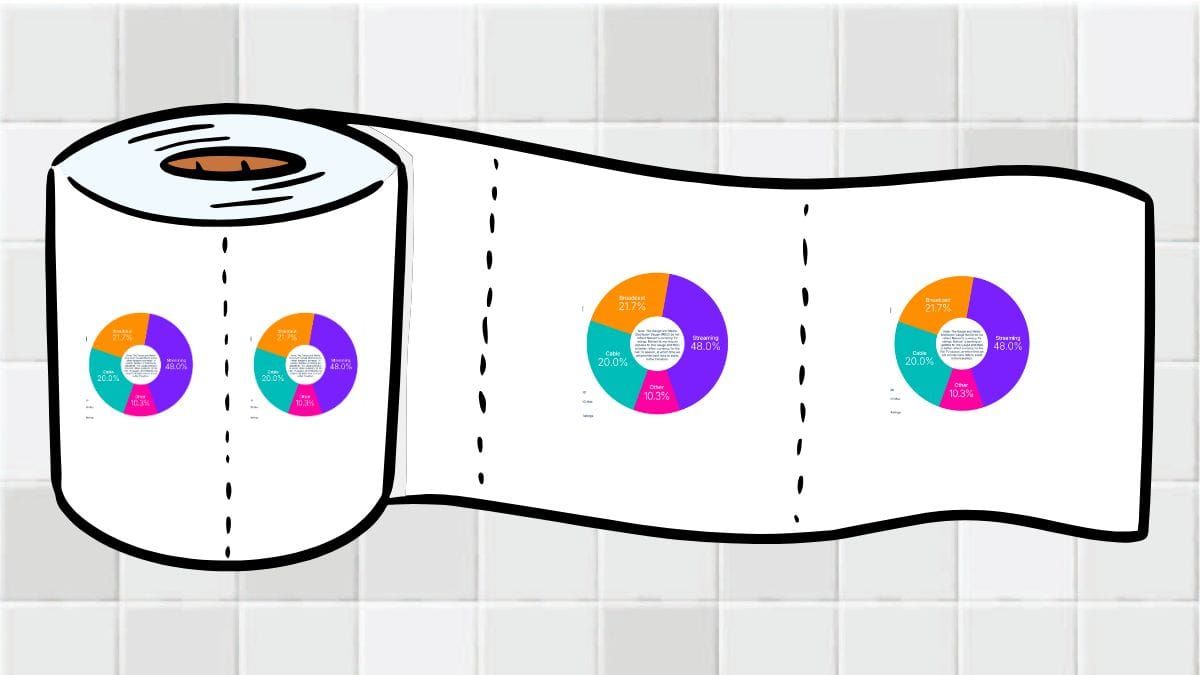
In a baffling decision, Nielsen chose to distribute viewing data it knows it will revise in the next few months. It could have released more correct data in the first place right now. Instead, it will wait till the fall – after upfront buying and selling is done – to fix the numbers.
Sean Cunningham, CEO of the VAB, which represents most of the linear TV networks, called the move an “indefensible manipulation” because the old numbers favor streaming, while the correct numbers boost broadcast and cable.
The data in question is Nielsen’s monthly report on the share of viewing that goes to broadcast, cable and streaming services. When Nielsen reported that streaming usage topped broadcast and cable combined in May 2025, it was big news.
But more recently, Nielsen was pushed to change the way its new Big Data+Panel data is calculated by the Media Rating Council after complaints by the VAB and others.
Nielsen was going to use the new system in its February report. It previewed the numbers for clients. The new numbers gave a bigger share of viewing to linear TV – broadcast and cable. Some clients had objections and Nielsen delayed the release, prompting more complaints from the VAB.
The decision to further delay the updated methodology and continue to release the objectionable data really annoyed Cunningham and the VAB.
“Purposely delaying and suppressing TV's February's audience totals - which include both a Super Bowl and an American-led Olympics is more than just public kowtowing to Google, or an escalation of Nielsen's thumb on the scale while cheerleading YouTube boom / TV gloom; this level of manipulation looks to me like obvious interference in markets,” Cunningham told The Measure in an email.
Cunningham noted that Nielsen has opted to use a methodology that has been proven to undercount TV viewing.
While this monthly report is not the currency used directly to buy and sell advertising time, “its results are widely used to help set channel allocation mindsets as an overall scorecard of relative scale among video advertising options, thus Nielsen is revealing itself as the dream partner for YouTube in co-creating scorecard fiction and calling it fact - as the company that gets to grade its own homework is guaranteed another seven months of bogus grade inflation if Nielsen has their way,” he said.
In releasing the February data on Tuesday, Nielsen said it made changes to its currency ratings for advertising in February 2026. But it said it is still working on updates to its monthly reports (share of viewing by channel and by distributor). It said it expects the reports reflecting the new methodology to begin in the fall. “At which time, Nielsen will provide additional back data to clients to assist in the transition.”
Nielsen has said that even using the new method, it expects streaming’s share to grow at the expense of linear TV.
According to the Wall Street Journal, the February report using the new methodology circulated to clients showed broadcast and cable combining for a 47.4% share of U.S. television usage, compared to 41.9% for streaming.
In January, using the old methodology, Nielsen reported that streaming had a 47% share of TV usage, with broadcast registering 21.5% and cable 21.2%. The February report released Tuesday gave streaming an even bigger share.
Mark Marshall, chairman of global advertising and partnerships for NBCUniversal, told the WSJ that using numbers that overestimate streaming’s share of viewing undermines efforts to sell commercials on linear networks like NBC and Bravo.
“Every media company is valued on a multiple of something, right? The baseline for all of these is revenue, and if that revenue is understated due to incorrect measurement, then absolutely, the valuations of these media companies are being impacted,” Marshall said. “That is why a change needs to happen.”
# # #
AMC Global Media struck a deal to make commercial inventory in its content available programmatically via Magnite.
Working with Magnite will give buyers a clear path to reach viewers of AMC’s linear networks, FAST channels and the AMC+ streaming service.
“AMC Global Media is among the first programming companies to offer its linear inventory programmatically, removing the need for buyers to manage separate workflows for linear and streaming while preserving the unique controls required for each environment,” said Catherine Dale, VP, revenue, SpringServe at Magnite. “This comes in line with the market trend and buy side mandate to consolidate and simplify access across inventory sources. As the 2026-27 upfront begins, we are partnering to offer our clients unified access to this popular and critically acclaimed content with greater operational efficiency, driving real impact for both media owners and advertisers.”
“Magnite has been an important partner for many years, and we are pleased to make our premium storytelling available to its customers in a way that buyers are increasingly looking for in today’s competitive and outcomes-driven environment,” said Evan Adlman, executive VP of commercial sales and revenue operations for AMC Global Media. “A consolidated programmatic approach across both linear and streaming supports more streamlined, measurable media executions and simpler access to our content and underscores the value and impact of buying cross-platform.”
# # #
AI company Moloco said it launched Moloco Ad for Performance CTV, designed to help app marketers looking to generate downloads and engagement in the living room.
"Connected TV represents one of the biggest untapped opportunities for app marketers today," said Sunil Rayan, chief business officer & general manager at Moloco Ads. "With Performance CTV, we're bringing the measurability and precision that app marketers expect from mobile to the world of television, giving them a genuinely new way to reach their audiences and drive results where attention has never been more valuable."
Performance CTV is designed to optimize impressions in real time against specific marketing outcomes with attribution running through the advertiser’s mobile measurement partner of choice. As a result, app marketers can reach and convert high-value users across screens.
Early results show up to 1.5 times higher return on investment on CTV compared to mobile when running campaigns across both, with two-thirds of users who install an app as a result of viewing a Moloco-delivered Performance CTV ad doing so within six hours, the company said.
“Moloco Ads for Performance CTV was a key component of our college basketball strategy for Fanatics Sportsbook this March,” said Blair Hilton, director of performance marketing at Fanatics Betting and Gaming. “Moloco played a central role in delivering strong campaign results – performance exceeded expectations and enabled us to reach a broader audience efficiently.”