
Deal-Seeking, Caution Define Consumer Holiday Spending
According to Wunderkind, 26% of consumers feel more cautious entering the final month of 2025 than they did at the beginning of the year


There’s no denying it: Tariffs and economic pressures are having a measurable impact on consumer behavior this holiday season. According to a December study conducted by Wunderkind, 26% of consumers report feeling more cautious entering the final month of 2025 than they did at the beginning of the year. Another 12% are downright panicked, while 21% feel somewhat less secure.
Consumer confidence differs by age, which has real implications for marketers looking to squeeze the most out the remaining weeks of holiday shopping.
Optimism levels for Millennials and Gen Z are strongest (26-30%), while only 17% of Boomers say they feel optimistic. Gen X falls in between. Wunderkind notes that these differences “shape how shoppers approach December promotions. Younger audiences may be receptive to time-sensitive deals that frame purchases as opportunities, while older consumers need messaging rooted in stability and clarity.”
Underscoring this lack of consumer confidence is the fact that a full third of consumers skipped Black Friday/Cyber Monday altogether this year, and that share jumps to 55% among Boomers. For consumers who did shop during BFCM, 47% say they spent the same amount this year vs. last, while 38% spent less.
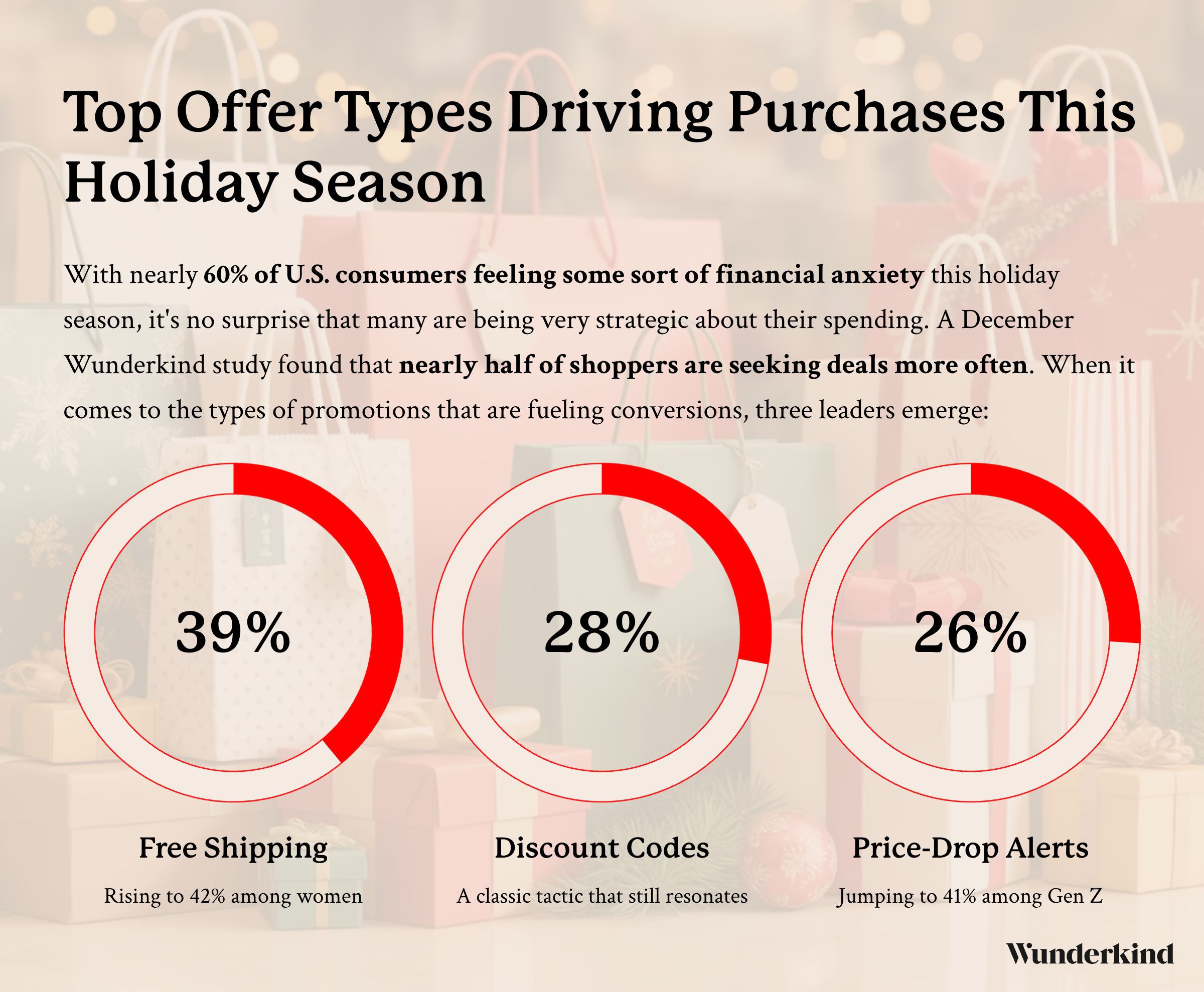
As consumers get strategic about their holiday spending, 49% say they seek deals more often, with Gen X leading the charge at 56%. When it comes to the types of deals and promotions that are actually fueling conversions, free shipping is a big one, influencing 39% of consumers. Discount codes (28%) and price-drop notifications (26%) are also encouraging purchases.
Consumers still rely most on email for personalized offers, with 50% naming it their top channel, especially older shoppers who trust its consistency. Younger audiences, however, are increasingly turning to mobile formats — 48% of Gen Z favor SMS, and 39% of Millennials respond strongly to app push notifications. Gender differences also show up, with women using SMS more than men (37% vs. 30%).
These shifts highlight the need for coordinated, cross-channel outreach: email provides dependable value cues, while SMS and push offer the speed needed for last-minute conversions. With channel fatigue peaking in December, brands must prioritize relevance and disciplined frequency to break through.
For more insights around consumer holiday spending, download Wunderkind’s full report here.