
Brand Collaborations: Mashups Are Gaining Momentum
51% of consumers say they’re excited to try brand collaborations, per an MX8 Labs study

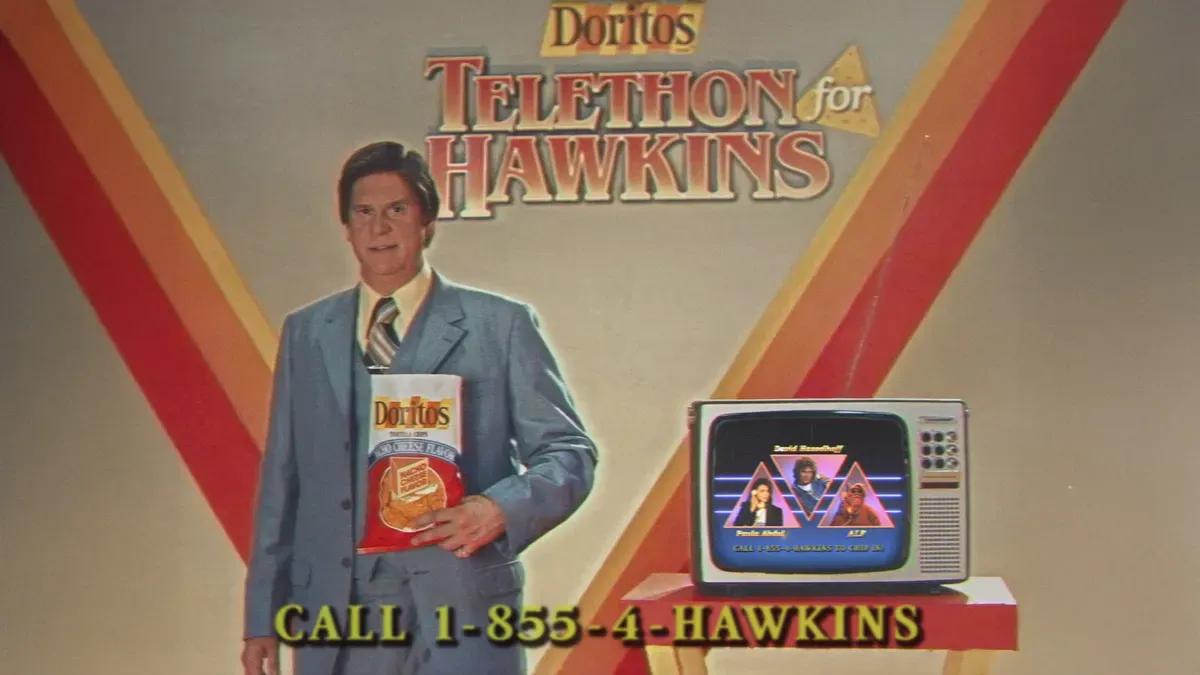
From snack aisles to sneaker drops, brand collaborations have fully cemented themselves as part of today’s consumer landscape. What once felt like marketing novelties has evolved into a steady stream of crossovers designed to spark curiosity — and, increasingly, social buzz. This fall’s Doritos × Stranger Things partnership is a prime example: Not only did the collab introduce a new limited-edition chip flavor, it arrived with an ’80s-themed telethon starring David Hasselhoff, Paula Abdul and ALF. The campaign doubled down on nostalgia while building momentum for the Netflix series’ final season, illustrating just how far brands will go to stand out in a crowded marketplace.
A new study from MX8 Labs suggests that these efforts are paying off. Consumers aren’t just seeing more brand mashups, they’re actively interested in them, engaging with them and — importantly — often making a purchase. The research shows that people gravitate toward collaborations that feel authentic, add value or tap into cultural moments in meaningful ways. For many, these partnerships aren’t just gimmicks; they’re a signal that brands are staying relevant and willing to experiment.
The study found that consumers are paying attention, with 20% saying they always notice co-branded or special-edition products, and another 37% say they often notice them. And that strong awareness is being met with enthusiasm: 51% of consumers say they’re excited to try brand collaborations, with that number jumping to 68% for Millennials.
In consumers’ eyes, a few key things make for a great mashup: 51% of respondents say that a collaboration is most compelling when the two brands naturally go together, while 49% say perceived value or a good deal is what makes them interesting.
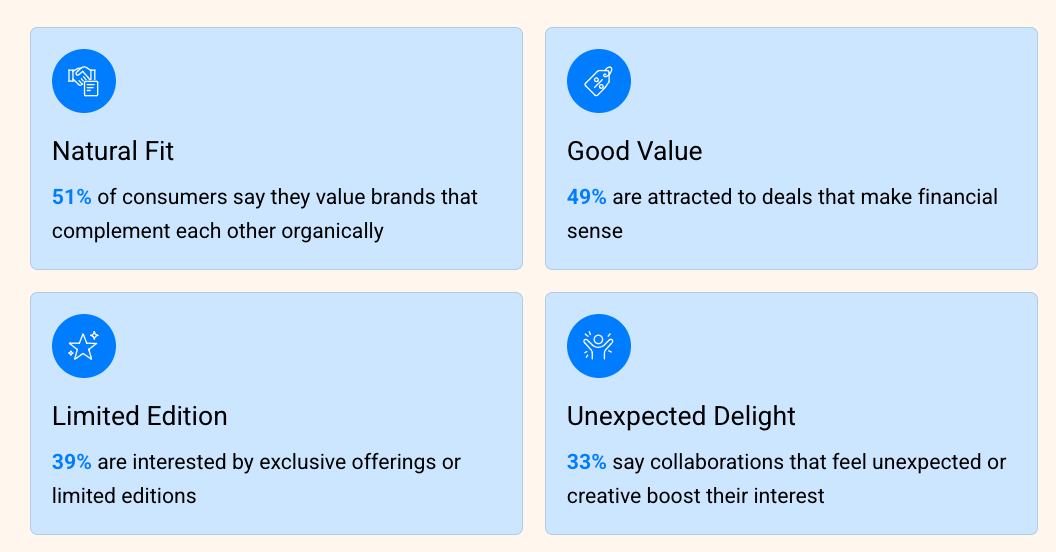
Pop culture partnerships also stand out: 57% say that brand collaborations with movies, shows or sports teams accelerate their existing interest in that content (cough cough, Stranger Things), and that figure surges to 77% among Millennials.
Awareness, interest and excitement are all great, but how about actual purchases?
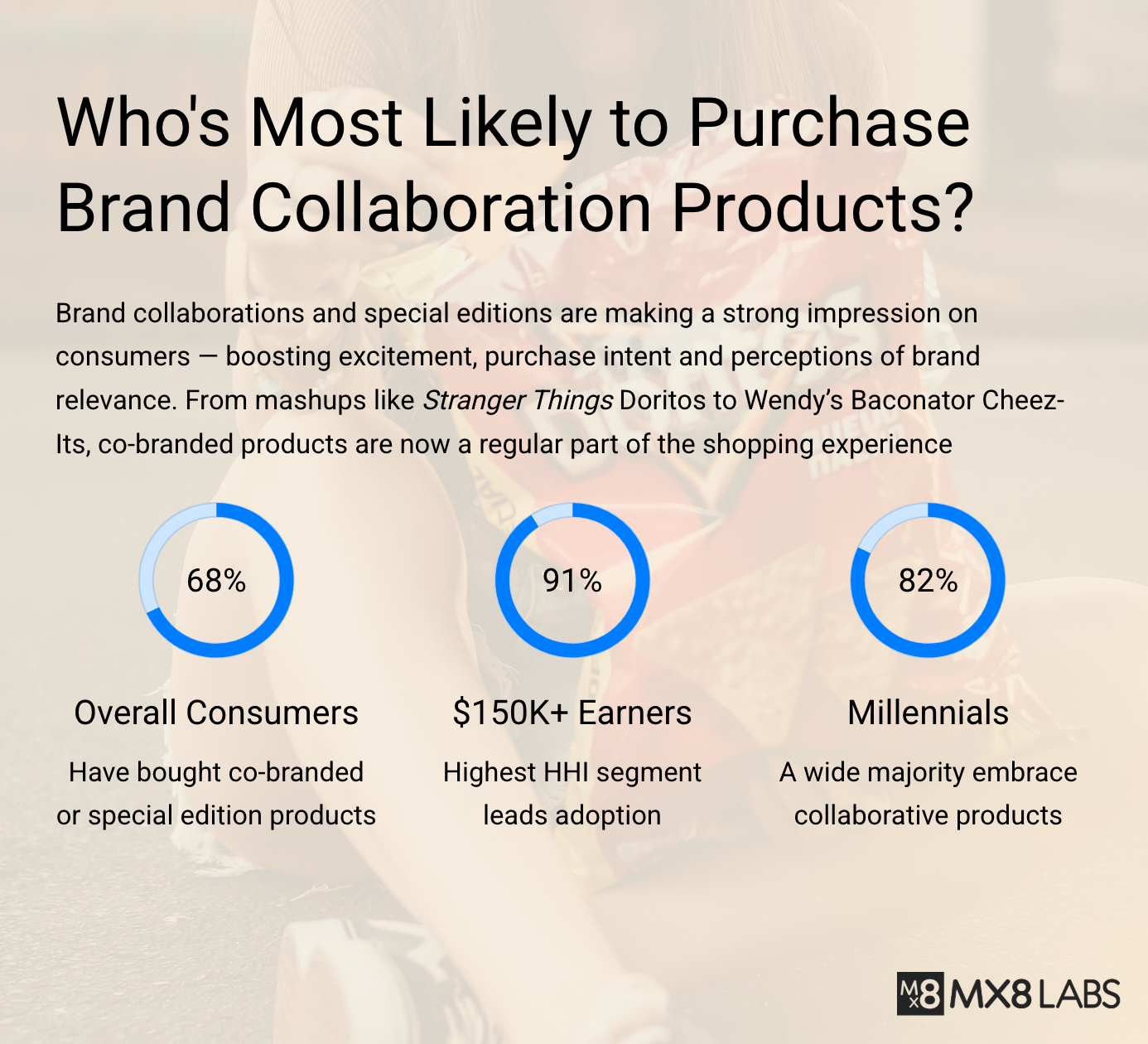
Over two-third (68%) of consumers say they’ve purchased a co-branded or special edition item, with notably higher rates among Millennials (82%) and those with household incomes of $150K+ (91%).
Labeling also matters: The term “limited edition” often prompts purchases, with 61% saying they’re somewhat or much more likely to buy products marked as such. Among Millennials, 47% are much more likely to buy limited editions. Meanwhile, 81% of consumers occasionally or often buy products labeled as “new” flavors or styles.
As collaborations become more frequent and more elaborate, the data suggests that consumers aren’t tiring of them — so long as the partnerships feel purposeful and culturally in tune. Brands that can strike that balance may find that mashups aren’t just attention-grabbers, but real drivers of excitement and relevance.
For more insights around brand collaborations, download the full report here.