
Why U.S. Audiences Expect Captions Everywhere (And Why Advertisers Need to Catch Up)

Captions used to be a space solely for foreign flicks, hearing impaired persons or when those thick accents just make it hard to understand.
Not so any longer – especially with younger audiences that have leaned into captions as a way to keep engagement while second screening.
In fact, new research from XR Extreme Reach reveals that captions have officially moved beyond solely being an accessibility feature, to become a mainstream viewing behavior – especially in the U.S.
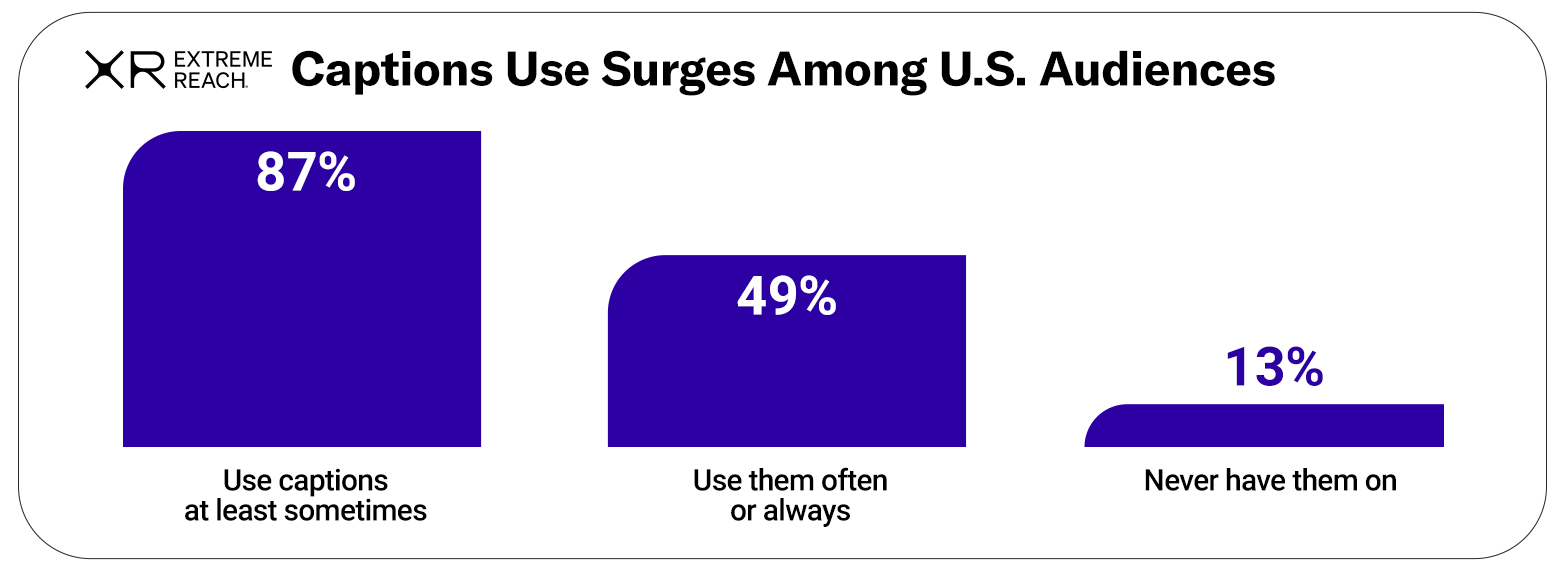
The research, released on Global Accessibility Awareness Day, shows that 87% of Americans use captions at least sometimes, with nearly half (49%) using them often or always when watching video. This shift is being driven by younger generations: 64% of 25-34-year-olds and 59% of 18-24-year-olds are frequent caption users.
Why the sudden surge? Viewers are using captions to follow dialogue better, catch details and even improve their attention to the screen. For many, captions are now "as important as the picture and sound," according to XR's CMO, Graham McKenna.
This trend has major implications for brands. Young audiences are more receptive to ads with captions, with 61% of 25-34-year-olds saying captions increase their attention to advertisements.
Despite this clear audience demand, advertisers are lagging.
In 2025, only 28% of TV and CTV ads in the U.S. included captions. For brands that want to connect with today's viewers, the message is clear: stop treating captions as an afterthought. Designing creative with captions in mind is the new standard best practice to ensure as messages land how and where they should.
Check out XR’s full report on captions HERE.