
The Browser Is At Its Breaking Point, Shift Report Finds
“When 1 in 5 users has 11 or more open tabs, what was once a feature becomes a distraction,” says Shift CEO Neil Henderson.

The modern web browser is increasingly failing to meet the demands of today’s digital lives, according to new research from customizable browser company Shift. Findings from the 2026 State of Browsing Report: Browser Usage Spotlight suggest that traditional browser design is struggling to keep pace with how users now work, communicate and manage multiple digital identities.
Based on a survey of 1,000 U.S. adults conducted in September 2025, the report highlights growing friction caused by tab overload, constant context switching and limited personalization in mainstream browsers. As hybrid work and app-based workflows continue to blur the line between personal and professional use, browsers have effectively become digital workspaces — but for the most part, they haven’t evolved to support that role.
One of the findings centers on how browsers are actually being used: 40% of respondents said their desktop browsing time is mostly personal, compared with 26% who primarily use their browser for work tasks. That underscores how browsers now sit at the center of everyday digital life, not just productivity.
At the same time, complexity inside the browser is mounting. 1 in 5 users reported juggling 11 or more tabs at once, while Gen Z and Millennials are most likely to keep between six and 10 tabs open simultaneously. Tech and IT workers mirror these habits, suggesting that complex browsing behavior is no longer limited to power users.
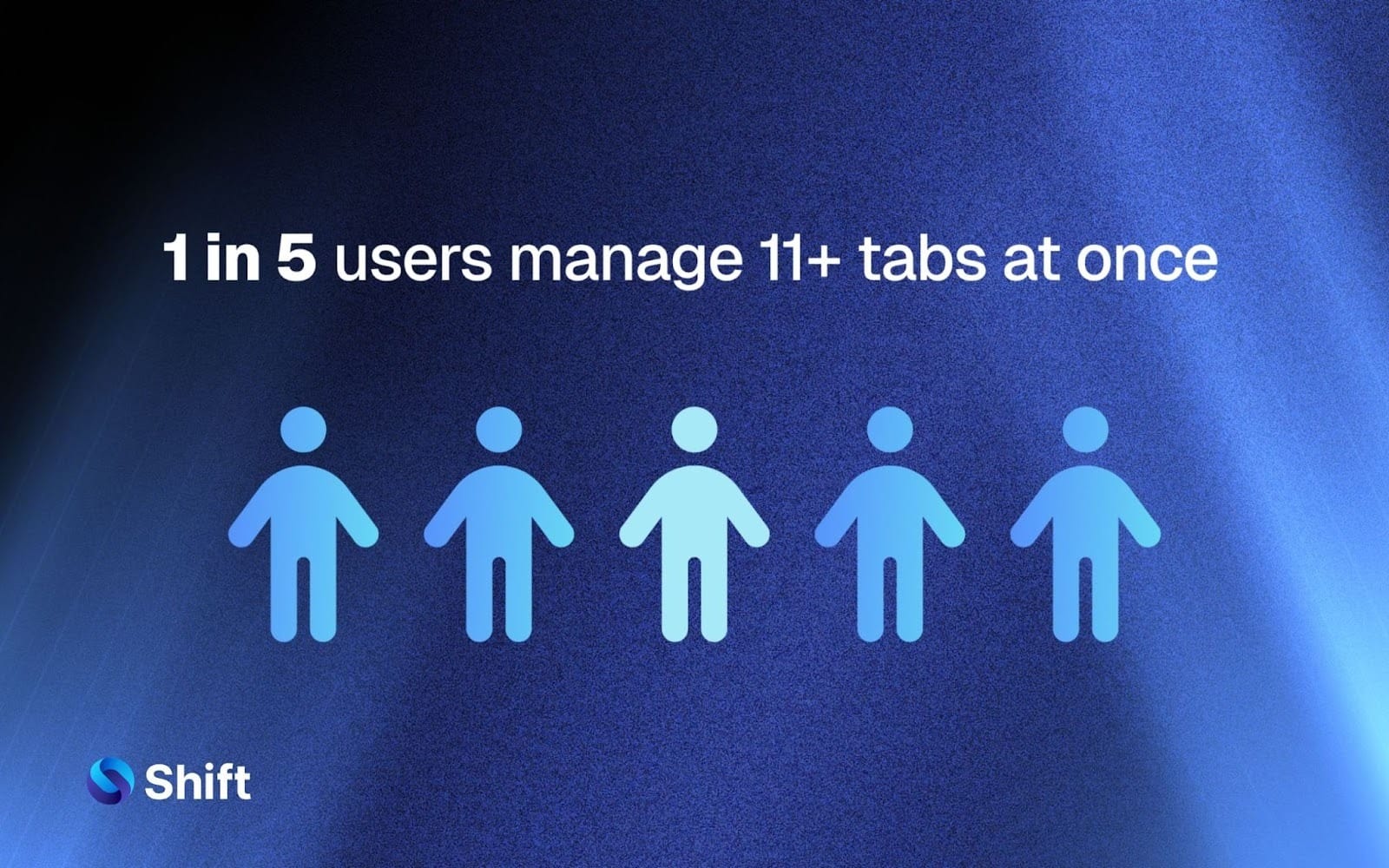
“Tab overload is evidence that browsers haven’t evolved with the way people actually work,” said Neil Henderson, CEO of Shift. “When 1 in 5 users has 11 or more open tabs, what was once a feature becomes a distraction.”
The strain is prompting many users to reconsider their browser choices. According to the report, 81% of respondents are willing to switch — or are actively considering switching — browsers. Personalization is a major driver of that interest, with 92% saying they want more tailored experiences and nearly half (47%) identifying workflow fit as very important.
When asked what features they want most, respondents pointed to practical tools designed to reduce friction: Support for multiple accounts and logins (39%), task organization (34%), notification blocking (31%) and app integrations (18%).
“People live multi-identity lives,” Henderson added. “The tools they use need to reflect that.”
For more insights, check out Shift’s full 2026 State of Browsing report here.