
Data: Browser Burnout Is Real
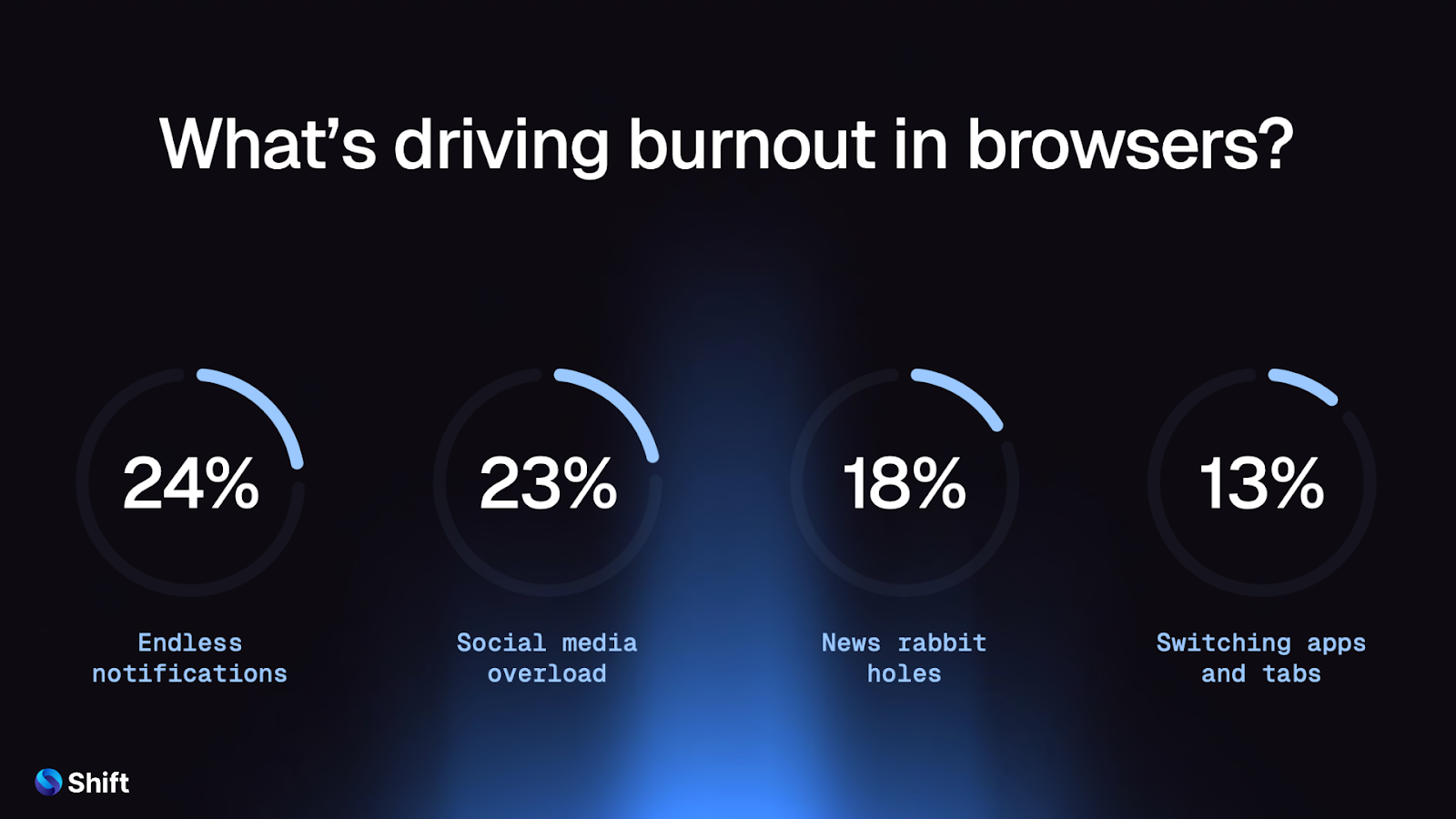
Endless notifications, social media overload and news rabbit holes are all driving burnout for browser users, per Shift.


Consumers are increasingly frustrated with the digital tools meant to keep them productive, and the web browser is emerging as one of the major culprits.
According to Shift’s 2026 State of Browsing report, the traditional browser model is no longer meeting the needs of an always-online society. Instead, constant tab overload, endless notifications and rapid context-switching are fueling what can be described as chronic digital fatigue.
Shift predicts that in 2026, browsers that don’t help lighten cognitive load are likely to lose relevance, particularly for professional users. The next wave will be focus-centric browsers built to minimize digital clutter, streamline workflows and protect users’ ability to stay locked in on what matters most.
“In 2026, browsers that don’t actively reduce cognitive load will start to fall out of favor, especially among professionals,” said Neil Henderson, CEO at Shift. “Burnout isn’t a user problem, it’s a browser design problem. The next winners will be those built for focus, not just access.”
Shift’s research illustrates just how overwhelmed users have become. Nearly half of users (47%) say their browser distracts them as often as it helps them focus. Meanwhile, 31% rarely make a deliberate effort to unplug from digital life, and the same share report always or often struggling to disconnect.
At work, 43% say they’re distracted multiple times per day, with social media ranking among the top causes. Constantly switching between web apps and pages (20%) and managing nonstop notifications (16%) also stand out as major disruptions to workflow. In the future, tools baked directly into the browser — from notification suppression to app minimization and task-focused modes — may be considered essential productivity levers.
“Every lost tab, every forgotten login, every alert is pulling money, resources and time off the table. Leaders are finally paying attention to attention,” says Henderson.
Henderson continued, “The one-size-fits-all browser fuels fatigue instead of focus,” he said. “The next generation of browsers must adapt to people — not the other way around.”
As digital demands continue to intensify across both work and home, one thing is becoming clear: The battle for focus may very well begin with rethinking the browser itself.
Get more insights about digital burnout and the state of browsing by downloading the full report here.