
AI Not Much Help With Finding Shows on Streaming Services
'The cost of solving it is trivial, next to the cost of letting wrong answers compound across millions of queries,' said Reelgood's David Sanderson

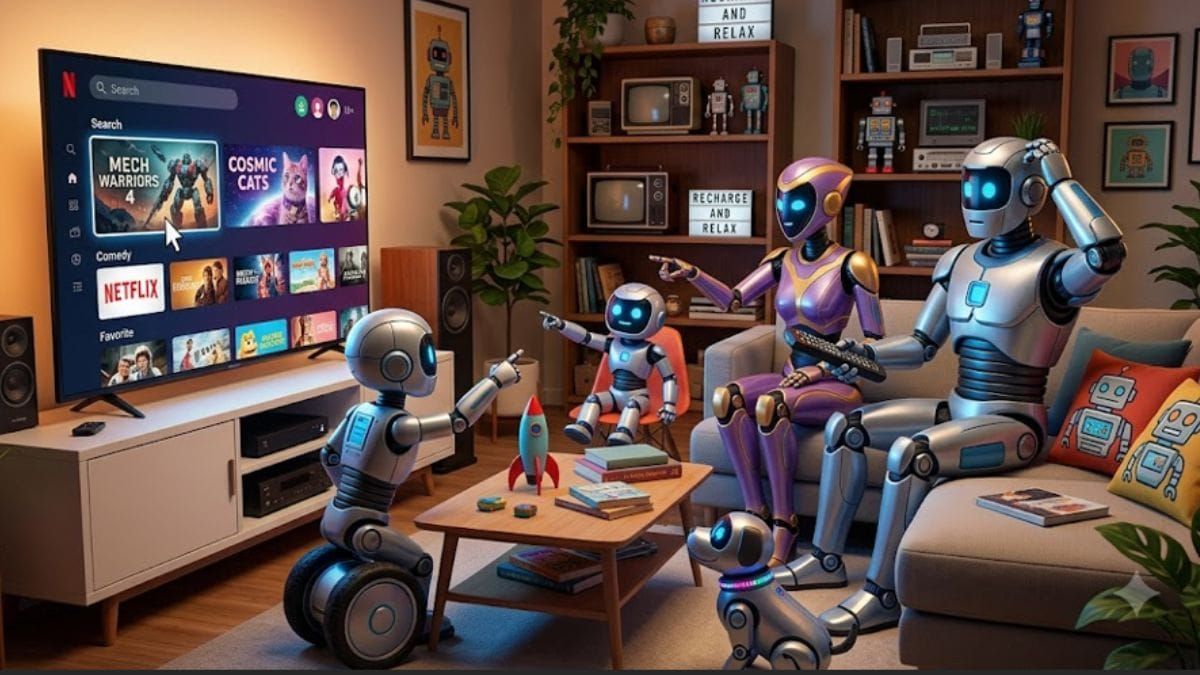
Streaming has made finding where to watch the shows you want to see more complicated.
You might think the vast resources and sheer brainpower of the big artificial intelligence chatbots would help. But you would be wrong, at least according to an analysis conducted by Reelgood on March 5.
It asked ChatGPT and Claude about the availability of 100 popular U.S. titles (films and TV shows), and found that Claude was 50.21% accurate and ChatGPT was 43.76% accurate.
By contrast, Reelgood, a streaming data company, said its own AI system, which covers 300 services in 25 countries, was accurate 96.98% of the time.
Why is streaming so hard for general AI systems to track? Reelgood found six problems that led to high error rates. Those included stale data, confusion about add-ons and bundles, non-coverage of free services such as Tubi and Pluto TV, mistaking titles that are available to subscribers and those that can be bought or rented, and fumbles involving shows with similar names.
“AI assistants are rapidly becoming the front door for streaming content discovery, and that's exactly where they lose user trust the fastest," said David Sanderson, CEO & founder of Reelgood. "When a model confidently tells a user a title is streaming on a service, they click to play, and it isn't there, that trust is gone instantly. It's also a solvable problem. Several of the largest AI platforms already work with Reelgood to power accurate, real-time availability in their assistants, because the cost of solving it is trivial, next to the cost of letting wrong answers compound across millions of queries.”
Reelgood says that to be correct requires that data about availability be constantly updated and that many search engines license Reelgood’s data to power AI-based content discovery services.
Studios Can Use Ticket Sales Data for Boffo Campaigns
The curtain is going up on a new way to plan, buy and measure campaigns for theatrical movies and it stars Ampersand, Fandango and Kochava.
Here’s the plot: Take the mix of the 62 million addressable households in Ampersand’s footprints, data from Fandango that connects with 72% of movie goers and up to 50% of U.S. box office transactions, and Kochava’s ability to connect TV viewing to outcomes.
“Movie marketing has not had this level of data-driven clarity,” said Rachel Herbstman, VP of data Innovation at Ampersand. “By unifying scale, intent, and attribution, studios can reach the right moviegoers, measure true performance, and maximize box office impact with confidence.”
The companies say combining Ampersand’s reach and Fandango’s sales data lets studios make buys that focus on high-intent movie-going audiences. Konchava enabled closed-loop attribution and full-funnel optimization.
"By connecting deterministic TV exposure to verified ticket sales in a privacy-safe way, this collaboration gives studios something they've long needed: clear, actionable insight into how premium television drives real box office outcomes. It's a major step forward in bringing true closed-loop accountability to TV advertising,” said Seth Samuels, GM of Foundry Services at Kochava.
Marketing Architects Expands Deal With Nielsen
Marketing Architects, a TV advertising services company, has expanded its relationship with Nielsen, adding access to Nielsen’s national TV measurement.
Previously, Marketing Architects had employed Nielsen’s local TV measurement data. It accessed the data via Nielsen’s Media Data Engine (MDE).
“The TV industry has been working around a data lag for a long time,” says Christi Uban, Senior Director of Media Investment, Marketing Architects. “We were one of the first to utilize Nielsen’s MDE on a local level and, fueled by the success we’ve seen, we’re now expanding it to a national level to provide clients with the insights they need to help them grow their businesses.”