
57% of Consumers Fatigued By Volume of Pharma TV Ads
MX8 Labs' report highlights a complex relationship between viewers, drugmakers and the ads designed to shape conversations with clinicians.

Pharmaceutical advertising has been a hot topic in 2025, driven by heightened consumer scrutiny and rapid shifts in healthcare behavior. As new treatments, GLP-1 availability and digital health platforms scale, debates around transparency, safety messaging and responsible promotion have intensified.
MX8 Labs surveyed American consumers to gauge their sentiment around pharma ads on TV specifically, and found that a majority are tired of the sheer amount they see. Overall, the findings highlight a complex relationship between viewers, drugmakers and the ads designed to shape conversations with clinicians.
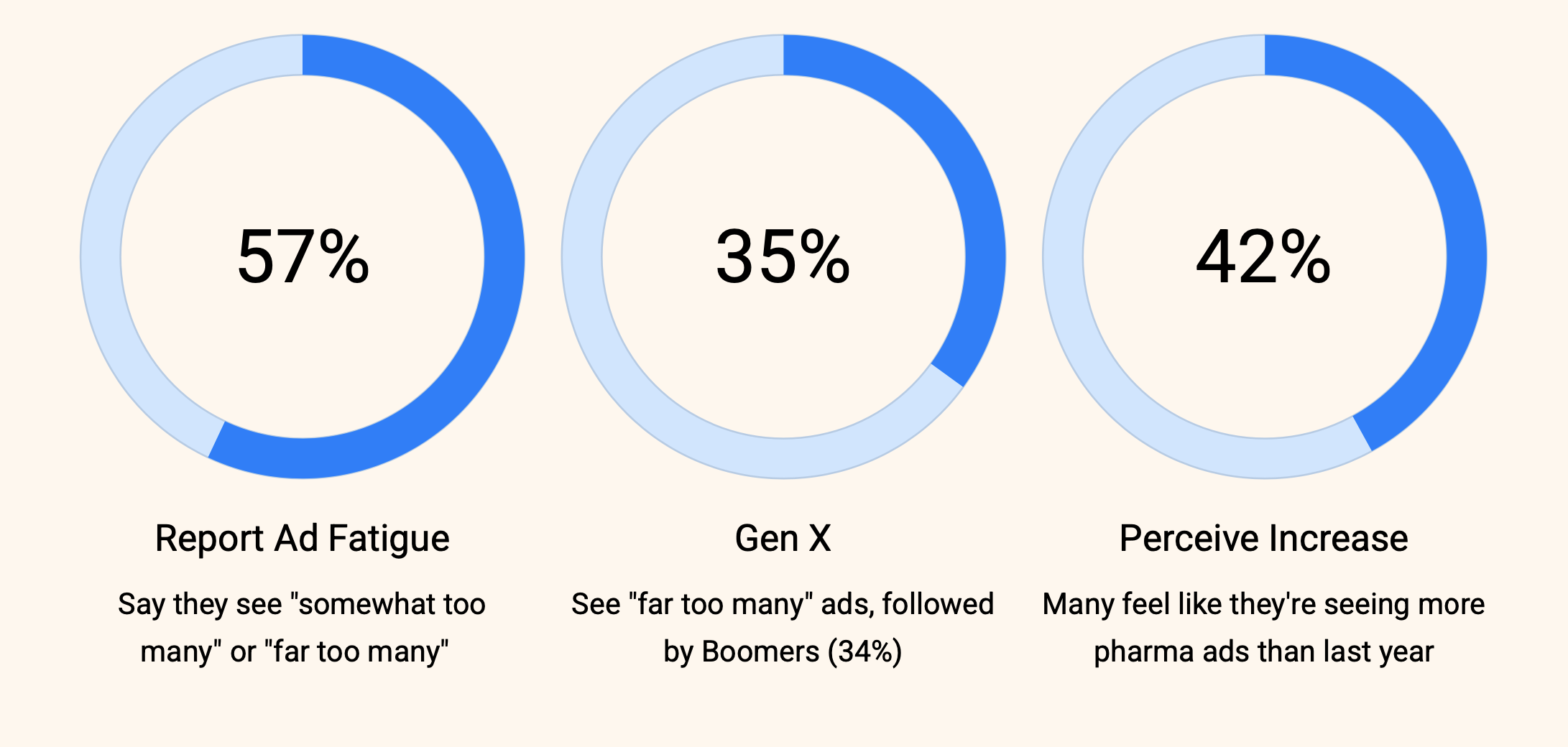
More than half of consumers (57%) say they’re fatigued by the amount of pharmaceutical advertising they encounter. Nearly a third report seeing “somewhat too many” ads, while another 27% say they see “far too many.” That sentiment is even stronger among older consumers: 34% of Boomers and 35% of Gen X say they’re inundated. This frustration is fueling policy opinions as well, with 43% saying they would support laws restricting or banning pharma ads, with Gen X the most supportive at 48%.
Still, trust in pharma advertising remains relatively strong. Six in ten consumers consider the ads at least somewhat trustworthy, including 60% of Gen Z who say the ads are “somewhat trustworthy.” And for many, the ads have a real impact on healthcare decisions. While 56% overall haven’t spoken to a clinician after seeing a pharma ad, key groups including Boomers (70%) are least likely to bring the topic up. Others are far more inclined: 61% of those with Master’s degrees, 56% of Gen Z and 54% of Millennials say they have talked to a clinician because of an ad.
Pharma advertising also directly drives prescription requests. A majority of consumers (53%) say they’ve asked for a specific medication because of an ad and had it prescribed. Among those with Master’s degrees, that number spikes to 80%.
Despite the mixed feelings, consumers broadly want changes in how pharma ads communicate. The most common request is for more prominent risk and side-effect disclosures, cited by 60% of respondents and rising to 64% among Gen Z. Nearly half want simpler, clearer language. Some also want a shift in creative tone: one in four say ads should avoid mascots or jingles or reduce emotional imagery, sentiments that increase among Millennials (33%).
Overall, the data paints a picture of a public that is highly exposed, somewhat skeptical, occasionally influenced — and increasingly eager for more transparency in pharmaceutical advertising.
For more insights around pharma advertising, download the full report from MX8 Labs here.