
Texas Rangers Get Winning Numbers from Scorekeeper Nielsen
‘Cable, satellite, over-the-air, out of home, all of these things were just in our DNA in terms of how we measure,’ said Nielsen’s Paul LeFort

Baseball is famous for its data. Fans can recite how many home runs Hank Aaron hit, how many wins Cy Young registered, the number of bases Rickey Henderson stole and how many championships the Yankees have won.
Some baseball stats, like batting average, and earned run average, have been calculated by children for decades. More recently a new generation of advanced metrics have been created so we can understand the game better. Now we can learn what contributes to winning and losing by studying wins over replacement (WAR), fielding independent pitching (FIP), weighted runs created plus (wRC+) and defensive runs saved (DRS).
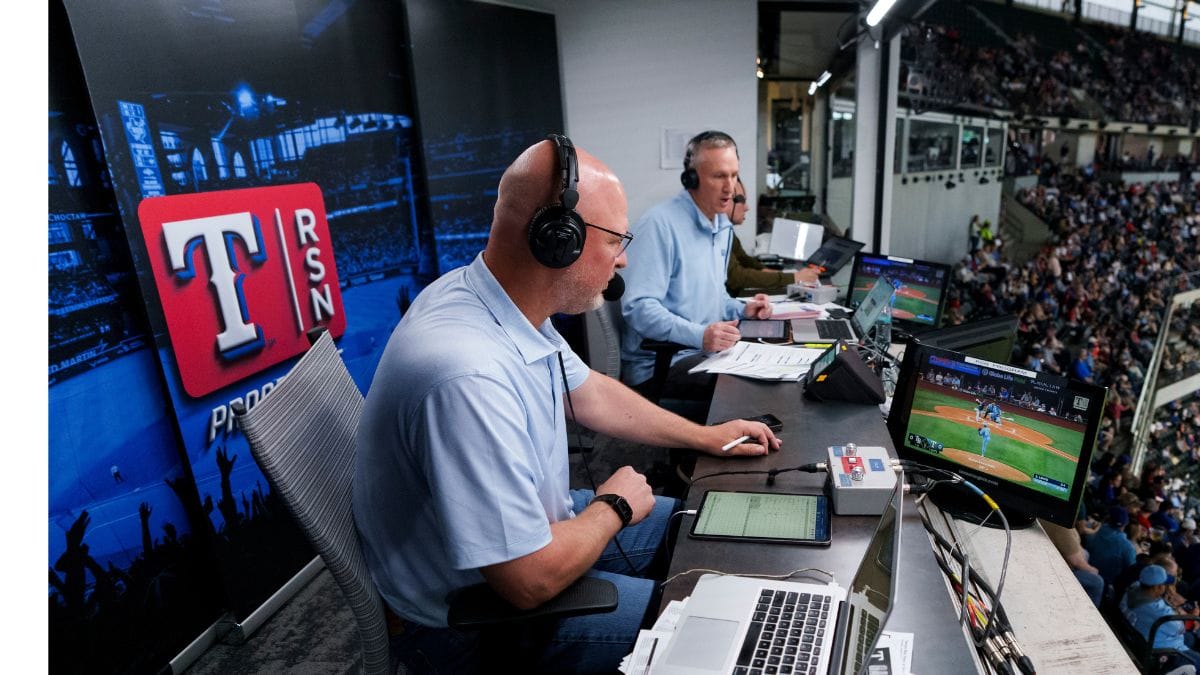
Last year, as the regional sports network business cratered, the Texas Rangers were one of the teams that decided to set up their own local television business. Not surprisingly, getting up to date measurement was high on the list of things thought about when the Rangers Sports Network was being launched.
“I would say it was incredibly important,” Katie Morgan, VP of business analytics and ticket strategy for the Texas Rangers, told The Measure.
The Rangers needed to understand and segment the people who were watching games on TV. That meant demographic information by age and gender. The data also needed to be broken down by quarter hours so the team knew when fans were watching and which commercials they were seeing.
The Rangers previously had gotten some of that information from their RSN partner. “As we got our foot in the door and started utilizing the data, those are some things we needed to pull out,” Morgan said.
Making the task more complicated was that the new network was designed to reach Rangers fans on multiple platforms–broadcast, cable and streaming–and over a five-state footprint that is much larger than the area covered by the team’s previous regional sports network.
The Rangers Sports Network decided to hire Nielsen–the industry's dominant scorekeeper—to provide measurement at the recommendation of its media sales team, Morgan said.
Nielsen was already set up to handle a multiplatform network like the one the Rangers were starting.
“Clearly they needed to be Nielsen measured. They need to be on the radar, to be able to compare their data to everyone else,” said Paul LeFort, managing director, local TV client services at Nielsen. “Cable, satellite, over-the-air, out of home, all of these things were just in our DNA in terms of how we measure and give them comprehensive coverage.”
Nielsen uses local people meters, portable people meters and streaming meters to measure viewership in its panes, along with big data from Charter Communications, Dish and DirecTV to measure viewing.
Watermarks were put on all of the content the new network put out so that it could be tracked from platform to platform, and then added up to come up with a deduplicated total audience number.
The Nielsen data confirmed that the Rangers had achieved its primary objective of reaching more fans. Ratings were up about 40% and impressions among people age 2 and up for advertisers were up to 57,640 per game, up 42% from 40,605 a year ago.
“We were very pleased with the growth year over year. I equate that with the work that the RSN team really did on making sure that our distribution met our fans where they were and ensured that anyone who wanted to watch a Rangers baseball game was able to find it,” Morgan said.
Revenue didn’t quite reach the same levels as when the team was getting a rights fee from incumbent Main Street Sports Group-owned RSN. “While local TV revenue may not have reached previous levels, we can say with confidence that building a quality broadcast internally was the best path for the Rangers,” Neil Liebman, chairman of the Rangers Sports Network, said in a statement. “The local TV landscape for MLB clubs is constantly evolving, and we feel the Rangers and RSN are well-positioned for the immediate future.”
LeFort said that Nielsen’s business with major league sports teams has grown by a factor of three over the past two years.
“Teams are the ultimate content owners. One of the most attractive properties on media right now is sports, and so as these teams are trying to figure it out, they utilize of of these different features of our data to help them monetize those audiences and figure out strategies to engage their fans,” he said.
The data from Nielsen gave Rangers Sports Network useful insights that it used to tweak the programming it aired.
In the middle of the season, the network began rerunning games at different times, including in the middle of the night. “We were surprised to see every re-air was pulling ratings. That means there were a lot of eyeballs on those games,
During last season, the Rangers saw their highest ratings on Friday nights, when the games were broadcast on KDAF. “Our distribution was so much broader on those data because of our over-the-air relationship. And we could see that through the data,” said Angie Swint, senior VP, broadcasting for the Rangers.
The network saw spikes in rating when star pitcher Jacob deGrom was on the mound. Viewership also grew when the Rangers played the Astros and when the Dodgers were in town.
It was also interesting that even as the team faded from playoff contention, viewership stayed strong. Typically, when the team isn’t contending, impressions tended to dip in August and September.
The metrics told the Rangers that viewership was higher for its pre- and post-game shows when its on-air talent, including former players like Elvis Andrus, were given more time to tell stories, Swint said. “Part of our job is to entertain and we saw the most fan interaction with those pieces,” she said. Even as the Rangers fell out of the playoff race, pre- and post-game viewership held up, thanks in part the relationship the on-air talent built with viewers.
Also, based on the Nielsen data, the Rangers are moving their spring training games to primetime, when it turns out more people want to see them.
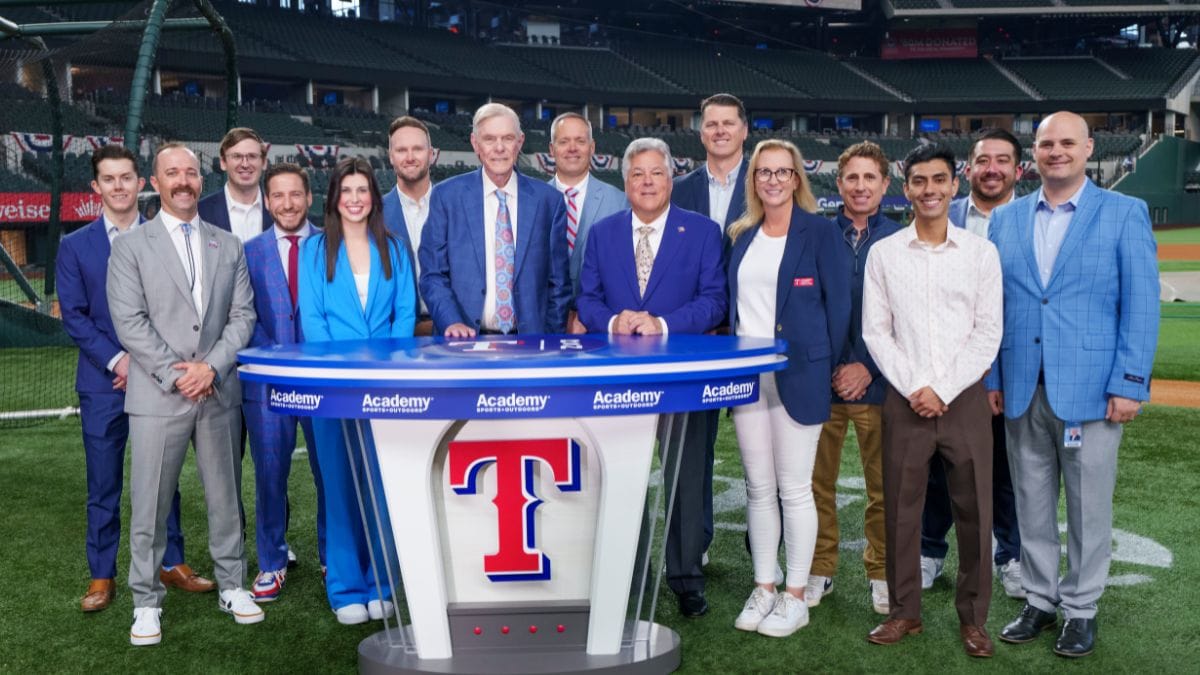
As more viewers choose to watch via the Rangers’ direct-to-consumer streaming product, the team gets more data about its fans. That data can be used to sell tickets and other merchandise to Ranger fans. “We would love to have you near, but we still think you’re a Ranger fan to the core if you can only watch from home,” Morgan said.
Nielsen also provided the Ranger with qualitative data from its Scarborough unit. “I know our sales team has taken some of those nuggets and used it to prospect new potential clients. Or if they needed a data point for an existing client, they would utilize that,” Morgan said.
For example, Nielsen’s Scarborough data showed that Gen Z is 12% more likely to engage with the Texas Rangers audience compared to a year ago. Gen Y is 11% more likely to engage with the Texas Rangers audience.
“Our Scarborough product actually measures all of those different ways of engaging with a sports brand,” Nielsen’s LeFort said. “I think the Rangers are among the more sophisticated teams that we work with. They use all of these data as inputs to calculate their valuations, whether they’re selling in-stadium signage or airtime.”
So after a year with their own network and source of data, what have the Rangers learned?
“I have a much better understanding of the age demographic and the gender demographic of individuals that are watching Rangers baseball,” Morgan said. “I believe toward the end of the year, we did see a little bit of a bump in female viewership. And I think one of the goals that we have is making our audience younger, so we have seen some growth in that space.”
The team’s ad sales effort has also been strengthened. “Creating our own network has allowed the opportunity for our media sales team to go out with new partners and existing partners and provide them with more opportunity than maybe they had previously,” she said.
Looking ahead to 2026, “we’re looking forward to having a little more of a runway with our sales team to provide them with some more detailed information as they’re going out on some of their sales pitches,” Morgan said. Last year that data wasn’t available because the network was just starting up.
Next season, the Rangers are also looking to do a better job of pulling its Nielsen data into its data warehouse so it can automate it more efficiently. That way, it will be able to have the data at its fingertips, instead of having to do a manual lift, she said. “That’s going to provide some real time insights that will be helpful for our team next year.”
# # #
Cast Iron Media, which specializes in delivering local advertising in live streaming sports, said it named former top Dish Media ad sales exec Kevin Arrix as chief revenue officer.
“Kevin’s experience scaling digital and streaming revenue, paired with his understanding of how advertisers think about local markets, makes him a perfect fit for this role,” said Dave Clark, CEO of Cast Iron Media. “As the industry continues to shift from regional sports networks to streaming environments, Kevin will help accelerate our ability to provide precise, transparent execution of local advertising across streaming platforms.”
Arrix most recently served as chief growth officer of XR Extreme Reach.
“The company’s ability to centralize and simplify access to live-game streaming inventory is unmatched, and I’m looking forward to helping Cast Iron continue its already impressive momentum into the future,” Arrix said.