
Shift launches $25k grant to fund tech solutions with sustainability in mind
Mainstream tech players love treating sustainability like a distant corporate policy goal—a neatly packaged target safely siloed in a future deck. Victoria, BC-based Shift Browser believes otherwise. The pioneers of tech should look at solutions that not only empower users but also work to mitigate the impact on the environment for future generations.
As AI tools rapidly proliferate, the hidden environmental tax is coming due. A recent study by the UN University reveals a stark trajectory: by 2030, AI's water consumption will match the baseline needs of 1.3 billion people, while its power demands are set to triple that of 650 million. That’s why it’s important to see companies like Shift work towards a more sustainable future.
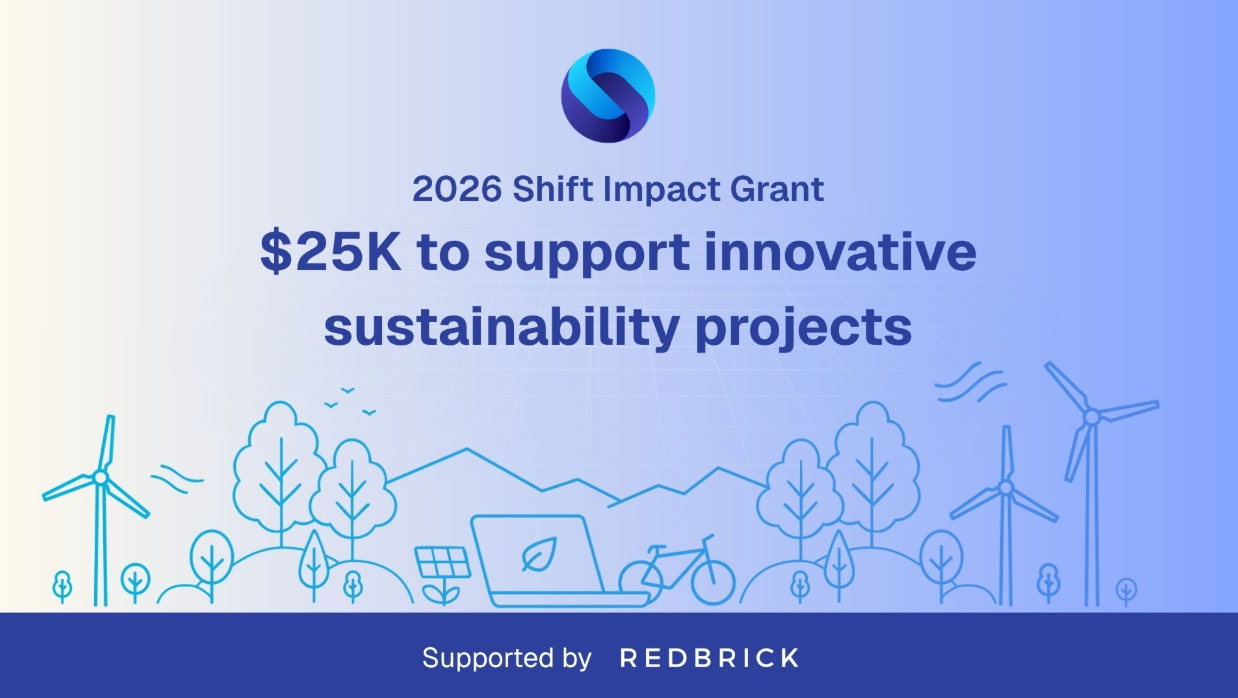
The company is back with its second annual $25,000 (USD) Shift Gives Grant, opening up funding to entrepreneurs and tech companies across the US and Canada who are innovating with sustainability in mind. Applications are officially open now until July 2nd. Last year’s recipient, FireSwarm Solutions, is a powerful example of what this funding is meant to support. The team is developing autonomous drone swarm technology for wildfire response, emergency operations, and critical missions where speed, resilience, and real-world impact matter.
For Shift, a pioneer of carbon-neutral browsing, the grant is an extension of an ongoing, embedded commitment to the planet. While legacy browsers remain rigid and indifferent to both user behavior and environmental impact, Shift is designed as a personalized command center that integrates productivity with responsibility.
The company's broader climate-conscious initiatives include:
- Tangible carbon removal: Shift offset 615 tonnes of CO₂ in Q1 2026 alone
- Investing in future innovators: Announced a $5,000 women in STEM scholarship through the Island Women in Science and Technology (iWIST).
- Community-driven data: Fully integrated an in-browser Carbon Meter, allowing users to collectively measure the environmental footprint of their apps and digital workflows.
The message to the tech sector is clear: stop waiting for future mandates. The tools to build a sustainable tech ecosystem exist today, but only if the industry intentionally funds the builders.