
Report Shows How to Find and Influence Black Consumers
Neilsen says reflecting interests and culture builds a stronger business for brands.

On Martin Luther King Jr. Day, Nielsen released a new report on how marketers can reach Black consumers and connect with their $2 trillion in buying power.
The report, called The Black Influence: How Black Culture & Identity Drive the Market, notes that when it comes to both content and commercials, 67% of Black consumers said they pay more attention to brands that reflect their culture, compared to 46% overall.
Failure to try to connect can be costly because seven out of ten Black consumers report they’ll stop buying from brands perceived as devaluing their community, up from 66% of Black Americans in 2023.
“Our new report clearly defines that authentic representation has an increasingly impactful influence on attention and purchase behaviors,” said Charlene Polite Corley, VP, inclusive insights, at Nielsen. “It's more than just simply checking a box. It’s about actively engaging with Black audiences, reflecting their interests and culture in an effort to build a stronger business for brands.”
Black consumers can be engaged via television. They are big TV watchers and four out of five minutes of their viewing is ad-supported.
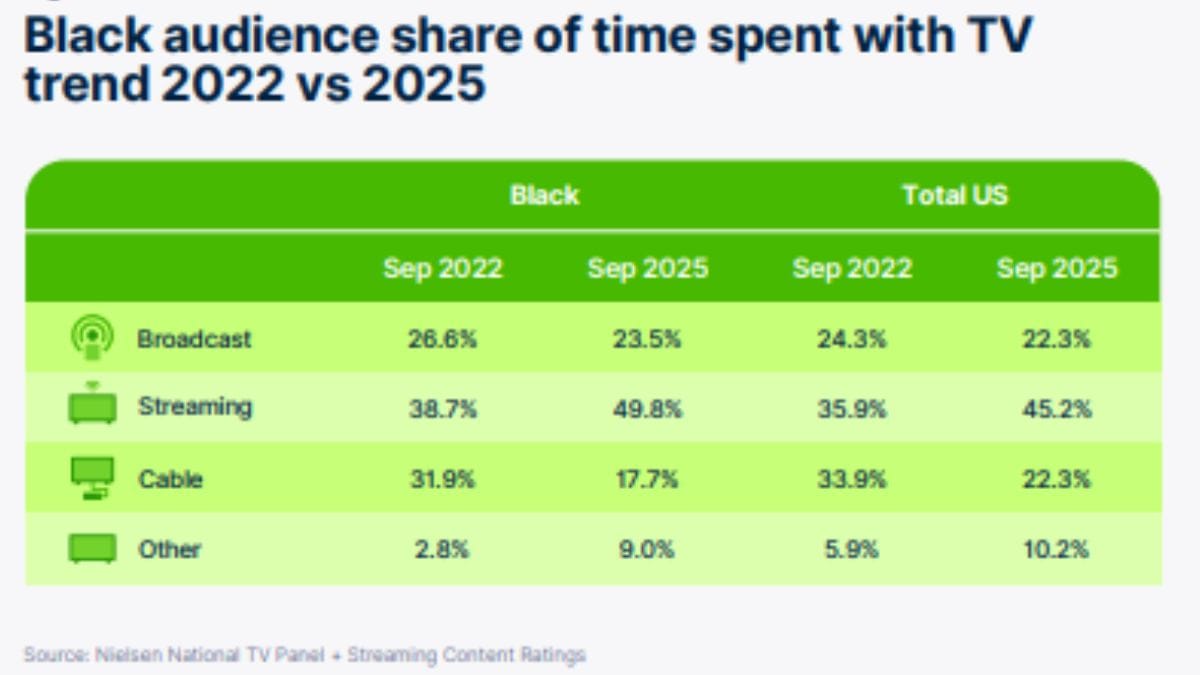
Overall, where and how Black audiences are tuning in has shifted rapidly in recent years
Since 2022, broadcast share of viewership with Black audiences has declined—but at half the rate of viewers overall, the report said.
Black audiences spend a quarter of their broadcast viewing with general dramas, more than any other segment.
Cable receives nearly one of every five minutes of Black audience viewing.
Behind sports content, feature films registered the highest share of Black audience cable viewing last season.
This preference is notable as Black audiences were the only segment to have a genre other than news as their most-viewed genre on cable
Moments like the BET Awards or the NBA Finals deliver significant shares of Black audience attention, spelling opportunities for brands to reach Black consumers through identity, fandom and culture, the report said.
Streaming has seen an 11-point increase in share of time for Black audiences from September 2022 to September 2025.
Black viewers consume a variety of content, including over 5.5 billion minutes viewed for western Gunsmoke, another 1.9 billion for K-Pop Demon Hunters and a variety of genres in between, the report said.
Black 18-49 year olds average nearly seven and a half hours more per week with connected TV than their counterparts of the same age group.
Black audiences average nearly five hours more a week with live TV than U.S. viewers overall. While viewing live programming, 14% average five hours or more on social media compared to 9% overall.
Black audiences also outpace the total U.S. in engagement with digital media, averaging two hours more a week.
As the cost of content rises, Black viewers are the most likely to prefer streaming services that are free to access and supported by ads, at 52% compared to 47% overall.
Black audiences drive nearly a third of total FAST engagement despite being just 13% of the TV population.
Across streaming platforms, Black audiences have found inclusive stories and characters to draw their attention and the impact often shows up in the Nielsen Streaming Top 10.
Streaming shows cited in the report for having big audiences and large shares of Black viewing include Forever, Beauty in Black, the Season 2 finale of Severance and Cross.
On streaming, older shows such as A Different World, Living Single and Martin are attracting new audiences among Black viewers 35 years old and younger, the report said.
The report gives marketers some ideas about interesting places where Black consumers can be reached.
In Nielsen’s Advanced Audience Attitudes Study, it found that 27% of Black respondents identified as gamers. Nielsen Streaming Platform Ratings reveal Twitch is often on the TV screen and young Black men are nearly five times more likely to report recently using the platform compared to adults overall.
Many Black consumers are foodies. They are 52% more likely to use grocery and restaurant delivery services compared to adults overall. These habits may be feeding the Foodie identity with young Black consumers, according to the report. The report found that 63% of Black consumers try to support media from creators who reflect their identity. The identity factors that motivate Black foodies to engage with new content are Age/Lifestage at 67% agreed and Race/Ethnicity at 59%.
The report found that 60% of Black travel enthusiasts consume must-watch content live as it airs or within 24 hours, compared to 46% of the general population, and that 24% of Black respondents identified as Travel Enthusiasts. That number jumps to 27% when you zoom in on Black Gen Xers. The Roku Channel catered to this experience with Tracee Elliss Ross starring in its Solo Traveling series last July. Black audiences were 65% more likely to view Roku than viewers overall during that month.
Black viewers are also Reality TV fans. Last year, Love Island USA landed in the top five most streamed originals for Black audiences. Black Reality TV fans are more likely to purchase from a brand partnering with creators or personalities connected to their fandoms.
Brands need to take steps to stay engaged with Black consumers.
Over half of Black consumers agreed a brand's stance on social issues is a major factor in their purchasing decisions.
The report says 56% of Black consumers prefer to buy based on ads that show up in culturally relevant content, compared to 35% overall; 63% expect brands to support causes they care about, up from 59% in 2023 and 55% of Black consumers agree they will no longer use a brand if the company mistreats employees.
The report said a recent Gap campaign with Katseye was an example that showed how inclusion led to attention and purchase growth.
The brand had already been favoring partnerships informed by culture, like its years-long Dapper Dan collaboration. Following investments like this, Black women are 21% more likely than the average consumer to have recently bought from Gap. But the viral “Better in Denim” campaign drove a 6% net sales increase for the brand.
Black consumers are the most likely to expect the retailers they buy from to support the causes they care about.
Consumers have shifted spending directly to the Black-owned businesses they support, bypassing retailers they feel are out of step. Black-owned beauty brand The Lip Bar reported a 40% uptick in sales last year despite in-store sales being down double digits.
Costco affirmed its commitment to “do the right thing” in 2025, the reports said. In addition to increased foot traffic in stores, Nielsen Media Impact showed a 31% increase in the Costco app’s reach among Black consumers. The company also reported a 14% year-over-year increase in member fee income.
“This isn't about tokens or ticking boxes—it's about forging meaningful connections that drive engagement and foster brand allegiance,” the report said. “Black consumer demand for inclusion isn’t retreating, and brands shouldn’t either.”