
Madhive Sees Silver Lining As Broadcast Business Consolidates
‘If you’re not running a local campaign on Madhive, you’re not running a local campaign,’ says Madhive CEO Jim Wilson

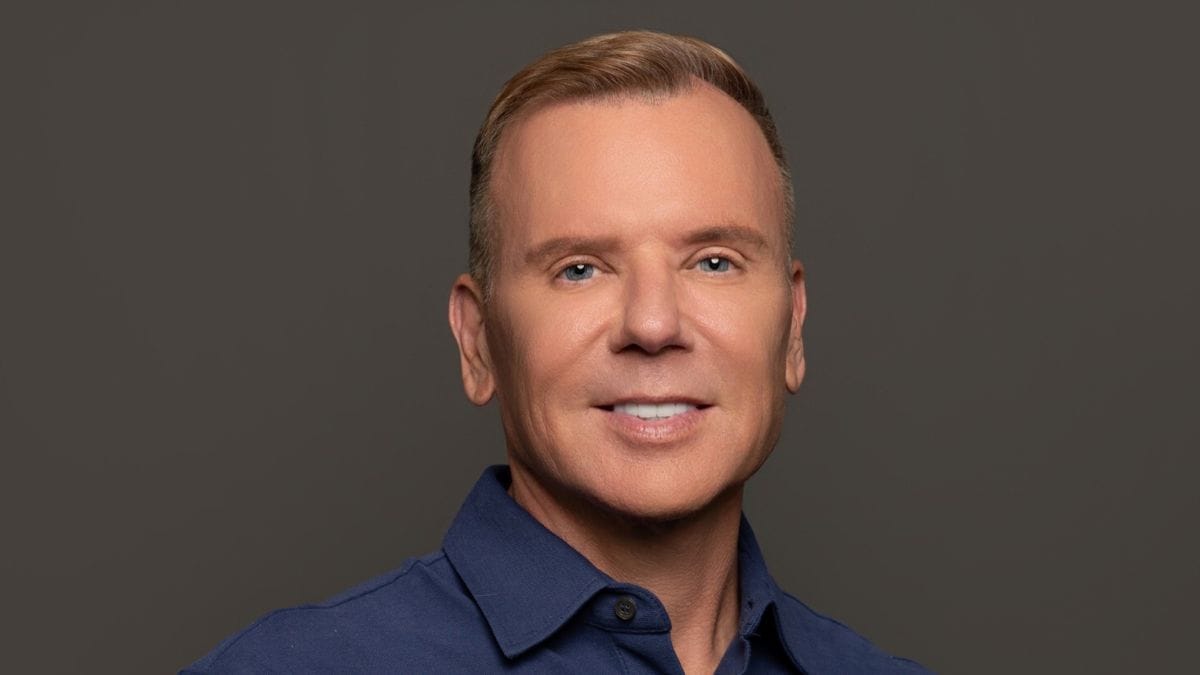
Two words summarize the state of local television: consolidation and convergence. Both have a profound impact on Madhive, which focuses on ad-tech for broadcasters.
Despite a restraining order pausing Nexstar Media Group’s absorption of Tegna to create a local station giant, consolidation is top of mind for station owners and managers, Madhive CEO Jim Wilson told The Measure.
“This is happening in real time,” he said. “There is streaming consolidation happening in real time and there’s cable consolidation happening in real time. The landscape is changing and, in my opinion, broadcasters are each looking at how well-positioned they are for this round of consolidation.”
Wilson, previously president at Tegna’s Premion digital ad unit, was named CEO of Madhive in October 2025, said that as TV stations consolidate, advertising will become an increasingly important revenue stream.
“Access to data is something that broadcasters haven't historically had, which should be on their roadmap going forward,” he said. Without better data on audiences and outcomes, they won’t be able to effectively compete for ad dollars as the video world converges.
Wilson adds that as those broadcasters shift from linear to digital, “the capabilities and the partnerships that they create to drive advertising revenue is going to become increasingly important.”
Wilson says Madhive is in a unique position to help local TV stations by providing data and ad tech.
“Madhive’s DSP was built specifically for local, with broadcasters in mind,” he said.
“I don’t think there’s another DSP in the market that delivers the same level of precision for local markets. I always say, ‘if you’re not running a local campaign on Madhive, you’re not running a local campaign,’” he said, espousing what could be a poster-worthy slogan for the company.
Madhive’s DSP delivers not only precision but also provides scale in a way that individual broadcasters currently cannot on their own. And to compete with digital giants like Amazon, Meta and Alphabet, broadcasters should leave creating ad tech solutions to companies that specialize in developing ad tech solutions such as Madhive.
“Broadcasters have been steadily losing market share to big tech for years. The consolidation of broadcasters puts them into a better position to have scale to compete with big tech,” said Wilson.
“In a consolidating media market, the question then becomes, do they themselves want to be tech companies, or is there an ad tech ecosystem of which we are part that can bring a significant amount of scale right off the bat? We at Madhive work with the majority of broadcasters. We have a significant amount of scale. Scale means better features, better costs, better delivery, everything that they're they want, I mean, that they need, in order to compete in the market.” he said.
In the industry, to achieve scale, many companies trade how precisely the target is defined to create audiences of meaningful size.
Wilson says Madhive is able to maintain precision while delivering scale. Its DSP’s bidding system is focused on finding the right impressions at the right time in the right market. And the company is putting its money where its mouth is.
“We announced a fraud-free guarantee six months ago, so our clients know we’re not in that business,” he said. “We’re in the business of delivering high-quality impressions within the geographies that our clients are looking for and the audiences they’re looking for.”
The data and audience scale that Madhive delivers allows broadcasters to boost the performance of a key asset: local salespeople who understand the market and their advertising clients’ businesses.
“One of their biggest competitive advantages is bringing consultative sales to local advertisers,” Wilson said. This advantage grows as more companies offer self-serve ad buying.
Madhive has been using its Maverick artificial intelligence system to provide broadcast sales reps with data and insights. Those insights include information about competitors, in-market spending and the availability of distinct types of inventory. Having that knowledge readily available will make broadcasters’ local sellers more effective.
Last year, Madhive invested in Precise.AI. That investment is helping Madhive build tools that automate creating proposals and building campaigns, making the process easier and more intelligent.
“We can reduce friction in the marketplace so we can increase the average sale size and the average number of products sold,” Wilson said.
AI is also helping Madhive get more products with better features into the market more quickly.
Madhive recently launched a sports marketplace to capitalize on the demand for live programming, especially games.
“Clients cannot get enough of sports at all levels, and we'll continue to build out our sports offering,” Wilson said. “Our DSP has also expanded from CTV-only to be an omnichannel platform, and we see a demand for sports across all products.”
All of this means that as the broadcast industry consolidates, Madhive has been growing and adding clients, according to Wilson.
“I contend that broadcast consolidation is good for local because healthy broadcasters are better than unhealthy broadcasters,” Wilson said.
“At the end of the day, we are an enterprise platform that they're leveraging for scale so that they can deliver a competitive experience or a competitive product to millions of customers,” he said. “Let's just say the broadcasters growing, and winning market share is what we're in the business to do.”
# # #
NBC Sports will use advanced hosting, monetization, audience measurement and audience insights tools from Triton Digital to support and scale its growing podcast and digital audio portfolio.
Audio and podcasting are becoming more important channels to media companies and NBC Sports will use Triton’s end-to-end audio tech stack to unify infrastructure, scale its podcast portfolio and enhance advertising and audience insights capabilities.
“We’re really excited to work with NBC Sports and support their continued growth in podcasting,” said John Rosso, President & CEO, Triton Digital. “Premium media companies are investing heavily in digital audio, and they need infrastructure they can trust to scale audiences and monetize effectively. Our goal is to make that easier—bringing together hosting, measurement, and monetization in one place so teams can focus on creating great content.”
“Podcasting continues to be an important and growing part of our broader digital audio strategy,” added Aileen Sokol, VP of content partnership development at NBC Sports. “Working alongside Triton Digital allows us to better understand our growing audiences and deliver reliable, consistent measurements to advertisers.”
# # #
Netflix said that its opening day telecast of the Major League Baseball game between the Giants and the Yankees drew an average minute audience of 3 million U.S. viewers, according to Nielsen.
The game drew big numbers among young viewers. The 1.38 million 18- to 49-year-olds who streamed the game was the largest opening day audience since 2017.
The game was presented by sponsor Adobe.

Later this season, Netflix will exclusively stream baseball’s Home Run Derby, sponsored by T-Mobile, and the Field of Dreams game on August 13.
# # #
Speaking of sports, analyst Robert Fishman of MoffettNathanson put some numbers next to the NFL’s plan to reopen its deals with the companies that televise football games.
When the NFL finishes with the process, he expects the NFL to secure a $15.9 billion increase in the average annual value of its deals, which would be 58% higher than its current deals would have generated.
CBS, now part of Skydance Paramount, is expected to pay the biggest increase of about 50%, in part because it must go first because of change-of-control language in its right deal.
Fishman sees Fox and NBC agreeing to 40% increases and ESPN paying 30% more.
Among the streamers, he expects Amazon to agree to double the amount it pays for Thursday Night Football because viewership levels are approaching those for Monday Night Football.
Fishman says the big media companies can afford the higher fees for programming they have to have. But they are also likely to increase their digital efforts as way to monetize their football assets. And some of the money that will pay for higher rights fees for the NFL will come out of budgets for other types of programming.