Big Brains w/ Evan Shapiro & iSpot's Sean Muller
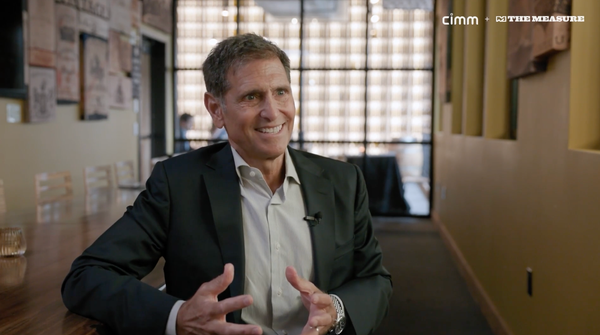
In this edition of Big Brains, Media Cartographer Evan Shapiro sits down with iSpot Founder and CEO Sean Muller.

In this edition of Big Brains, The Measure's summer interview series hosted by Media Cartographer Evan Shapiro, iSpot Founder and CEO Sean Muller explains why better outcomes start with better data—and why creative, AI, and cross-platform measurement must work together to drive advertising performance.
Big Brains is presented by:

This interview has been edited for length and clarity.
Evan Shapiro: Last year on Big Data Brains, outcomes measurement was emerging as a major industry trend. Fast forward to today, and it feels like every major media deal is being positioned around outcomes. What's changed?
Sean Muller: There's certainly a lot more momentum around outcomes—but not always a lot of discussion around what that actually means.
For us, it starts with accurate audience measurement across every screen. If you can't reliably measure who saw an ad across linear TV, streaming and digital, tying media exposure to business outcomes is dead on arrival.
The first step is defining what success actually looks like. For one advertiser it's an online purchase. For another it might be a dealership visit, a grocery purchase or simply getting someone into a store. Once you've defined the outcome, you have to measure both the short-term and the long-term impact.
Short-term outcomes are the traditional attribution metrics everyone knows. Long-term outcomes include things like purchase intent, brand recall and favorability—the metrics that ultimately drive sustained growth.
Evan Shapiro: One of the more interesting themes from your conversation was that outcomes aren't just about targeting—they're also about creative.
Sean Muller: Absolutely.
We at iSpot like to think about it as a simple equation: Creative + Audience = Outcome
Most marketers spend enormous energy optimizing audiences while treating creative as a fixed variable. In reality, creative has just as much impact on performance—and in many long purchase cycles, it can matter even more.
You [as a marketer] need to understand not only who you're reaching, but which creative resonates with which audience. That's where a lot of organizations still struggle because creative teams and media teams often operate independently instead of optimizing together.
Evan Shapiro: AI dominated conversations throughout Cannes Lions this year. Where do you see AI making the biggest impact?
Sean Muller: Ironically, it's not necessarily in creating ads. AI's biggest opportunity is helping marketers understand why advertising works.
At iSpot, we've spent more than a decade measuring creative effectiveness. We already understand things like purchase intent, recall, likability and emotional response. What AI now allows us to do is explain why a specific creative performs well with a particular audience.
Instead of simply telling an advertiser that an ad worked, we can identify the moments inside the creative that drove that performance and help inform the next campaign. That's where AI becomes transformational.
Evan Shapiro: You also made an important distinction around data quality. AI only performs as well as the data behind it.
Sean Muller: Exactly.
If you feed bad data into AI, you don't just get bad outputs—you amplify the problem.
That's why we've invested in building our own AI infrastructure trained on more than 15 years of trusted audience, creative and outcome data. The models are valuable because they're built on data that's already been validated in the marketplace.
Everyone is talking about AI workflows, and those workflows absolutely matter. But every workflow still needs trusted measurement underneath it if it's going to make smart decisions. That's where we see our role in the ecosystem.
Evan Shapiro: Where do you see outcomes measurement evolving over the next year?
Sean Muller: Advertisers have been measuring outcomes for years. What's changing now is that publishers are embracing it as well. The goal is to create a true apples-to-apples comparison across every media channel—linear TV, streaming, YouTube, TikTok and everything in between.
That means looking beyond simple conversion rates. You also need to measure lift—understanding not just whether someone converted, but whether the advertising actually caused that conversion. Once every channel can be evaluated using the same methodology, marketers can make much smarter investment decisions.
The next phase goes even further: Publishers won't simply report outcomes—they'll begin optimizing campaigns in real time using outcome signals to improve performance while proving the value of their inventory. That's where the industry is heading.
Join Evan Shapiro and Alan Wolk in October!