
AI Agents vs. the Ad Agency: Friend or Foe?
Basis survey finds AI use and worries about the future of the business rising

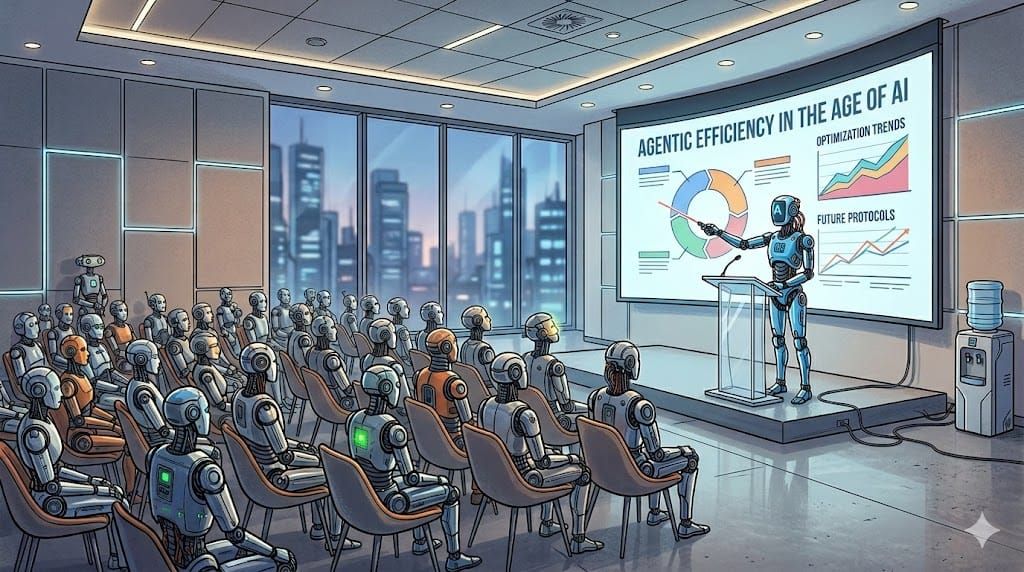
The only way to deal with the torrent of data available to marketers today seems to be the increased use of artificial intelligence and agentic systems that make AI easy for mere humans to use.
This might not be good news for the advertising agency business, which was showing creaks and cracks before AI muscled its way into every conversation and strategy session, according to a new study.
The study of 200 advertising professionals was conducted by Basis, which makes an operating system for autonomous advertising. There are two layers of concern when it comes to AI and the ad agency business. One is that AI will take the jobs of people. The second is that AI will enable advertisers to take the job of the agencies in-house.
According to Basis’s 2026 Advertising Agency Report, almost 40% of agencies have had layoffs in the past year. For the first time since Basis began tracking industry sentiment, fewer than half of agency professionals said they feel optimistic about the future of digital advertising.
This is happening as AI use expands, with 58.2% of those surveyed saying they use AI tools every day, up from 38.6% last year. Agentic AI use is already being used by 46%.
Agency jobs are getting harder, with especially younger staffers thinking about looking for new jobs.
The bottom line is that among senior agency leaders, 92% believe that the traditional agency model is either broken or will be within 3 to 5 years.
Some of these concerns were addressed last week by Arthur Sadoun, CEO of Publicis Group. On the giant ad agency holding company’s earnings call, Sadoun noted that since the launch of Publicis’ AI platform Marcel in 2017, the company has nearly doubled its earnings before interest, taxes, depreciation and amortization, and increased its profit margins. It also increased revenue 6.4% in the quarter.
“AI is making us faster and more efficient, but overall, it is putting us at the heart of our client agentic marketing transformation,” he said.
But in a video for staffers, Sadoun noted that this wasn’t a time of expansion for all ad agencies, particularly its biggest competitors, such as WPP and Omnicom.
“They are squeezing their number of people with massive layoffs. They are squeezing their number of shares with huge buybacks. And they are squeezing some of their assets by simply putting them up for sale,” he said.
“So let me be very clear, at Publicis our strategy is the polar opposite of that,” Sadoun said. “First we don’t see people as a debt, we see them as our greatest asset and a key differentiator for our clients.”
He went on to say, “That is why we will continue to invest in attracting and retaining the best talent. And even more importantly, training all of you for an AI driven future. We will never become a synthetic company.”
The Basis report identifies a path forward. It says the agencies shouldn’t be cautious but instead act.
“Basis’ 2026 Advertising Agency Report illustrates an industry in flux, where operational complexity, economic pressure and AI-driven disruption are forcing agencies to rethink how they work, how they deliver value and how they are compensated,” said Ryan Manchee, senior VP of brand marketing at Basis. “As the agency model transforms, the question now is what tools, technologies and practices these businesses will use to refit and remodel. While AI can be a business accelerator and force multiplier for agencies, it is only effective if it operates on advertising systems that are structured and connected.”
The report notes that advertising spend is projected to surpass $1 trillion globally for the first time in 2026, which should present opportunities, and “brands still need partners who can help them navigate an increasingly complex and fragmented media landscape.”
But those working agencies surveyed don’t sound all that optimistic about the future.
The percentage of agency staffers who said working in digital advertising was getting harder rose to 66.2% from 60.8% in 2025 and 58.4% in 2024.
Part of that difficulty is the number of tools they must use as part of their tech stack. In the survey, 36.8% said they were working with 10 or more tools, up from 17.3% in 2024. At the same time, relationships with clients are more tense, with 54% reporting strained relationships, up from 50.9% in 2025 and 43.4% in 2024.
All of this adds up to 62.9% of agency professionals saying they’re open to looking for a new job in the next 12 months, up from 55% last year. Among more junior staffers, 80.7% say they’re likely to search for a new job in the next 12 months.
The report says this “suggests that a meaningful portion of entry-to-mid level staff are beginning to weigh their options as the ground beneath their current roles feel increasingly uncertain – and, potentially, reconsider whether they wish to continue their careers in the agency world.”
Will agentic AI help? Here is what agencies have agents doing now: Reporting/analytics (61.2%), campaign brief creation (58.2%), content creations (57.1%), creative optimization (43.9%), personalization (36.7%), media planning (20.4%) and media buying (9.2%).
“This report is, in many ways, a canary in the coal mine. The data collected here reflects an industry that is aware of its challenges and anxious about its future. But that awareness, in and of itself, is not enough. Agencies must take deliberate and decisive action in next 12-24 months to ensure they can survive — and thrive — in the age of AI,” Basis says.
“The good news is that optimism has not disappeared. A majority of agency professionals still feel good about the future of their own agencies, and leaders remain broadly committed to investing in the tools and technologies that can help them adapt. The opportunity is real. But so is the urgency,” it concludes.